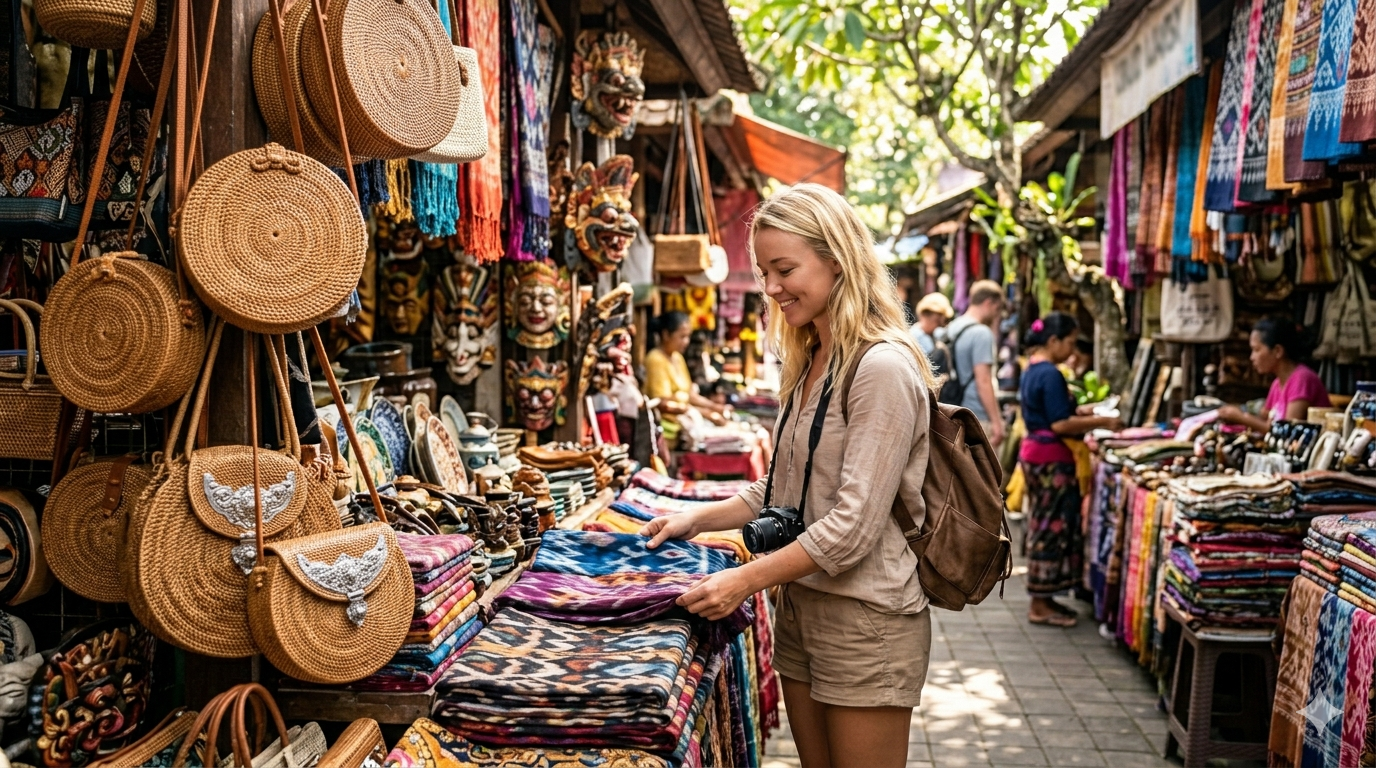
If there's one market that almost every Bali visitor eventually finds themselves wandering through, it's Ubud Art Market.
Located in the heart of Ubud, directly across from the historic Ubud Palace, the market has become one of Bali's most famous shopping destinations. Colorful stalls spill into narrow walkways, displaying everything from woven bags and handmade jewelry to paintings, textiles, and wood carvings.
But with hundreds of vendors selling seemingly similar products, one question quickly arises:
What's actually worth buying?
The answer may surprise you.
The Market Is Bigger Than It Looks
From the outside, Ubud Art Market appears relatively compact. Step inside, however, and you'll discover a maze of stalls packed closely together, each offering its own interpretation of Balinese craftsmanship. Some products are genuinely handmade by local artisans. Others are mass-produced souvenirs that can be found throughout Southeast Asia. The challenge is knowing the difference.
The Famous Rattan Bags Are Worth a Look
One of the market's most recognizable items is the round woven rattan bag. These bags became internationally popular after appearing across social media and travel blogs. While many vendors sell similar versions, quality varies significantly.
Look closely at:
- Weaving consistency
- Stitching quality
- Leather straps
- Interior lining
The best pieces feel sturdy and carefully finished rather than rushed for tourist demand.
Handmade Wood Carvings Remain a Hidden Gem
Many visitors focus on clothing and accessories while overlooking one of Bali's strongest artistic traditions. Wood carving has been part of Balinese culture for generations.
Some stalls offer beautifully detailed pieces featuring:
- Hindu mythology
- Traditional dancers
- Animals
- Nature-inspired motifs
Smaller carvings often make unique souvenirs that are easier to transport home.
Batik and Textiles Can Be Excellent Purchases
Balinese fabrics are among the most practical souvenirs available.
- Visitors often find:
- Sarongs
- Table runners
- Decorative textiles
- Handmade fabrics
The key is checking fabric quality before purchasing. Higher-quality textiles generally feel softer, heavier, and more durable.
Not Everything Is Handmade
This is perhaps the biggest misconception about Ubud Art Market. Many first-time visitors assume every item is locally crafted. In reality, some products are imported or mass-produced. This doesn't automatically make them bad purchases. However, if authenticity matters to you, don't hesitate to ask vendors where products are made. Most will answer honestly.
Bargaining Is Part of the Experience
Unlike shopping malls, prices at the market are often flexible. Bargaining remains a normal part of the process. The goal isn't necessarily to secure the absolute lowest price. Instead, aim for a fair price that both you and the seller feel comfortable with. A friendly conversation usually works far better than aggressive negotiation.
What Most Tourists Overpay For
Some items tend to carry the highest tourist markup.
These often include:
- Generic keychains
- Mass-produced magnets
- Factory-made trinkets
- Imported accessories
You'll find similar products elsewhere in Bali for lower prices. If you're shopping for meaningful souvenirs, it's often worth focusing on handmade crafts instead.
Ubud Art Market isn't just a place to shop—it's one of the best places to experience Bali's artistic spirit. The key is looking beyond the obvious souvenirs and taking time to discover items that reflect the craftsmanship and creativity that have made Ubud famous. Whether you leave with a handcrafted wood carving, a woven bag, or simply memories of wandering its colorful lanes, the market remains one of Bali's most rewarding cultural experiences.